Links to: 2020/21 – 2018/19 – 2016/17 – 2014/15 – 2012/13
Imagine a world with abundant clean water.
Where everyone shares adequate energy from the sun and wind.
A world where forests, rivers, oceans, and wildlife thrive.
A tomorrow more beautiful than today.
This is the world we want to create.
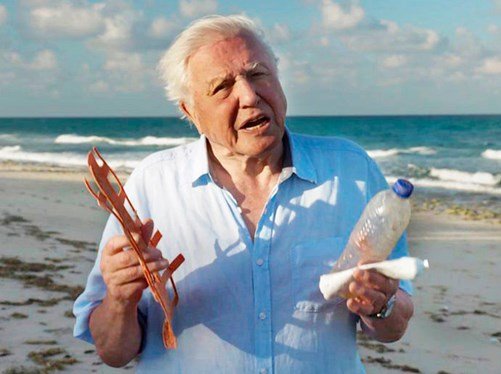
Population Matters Patreon, Sir David Attenborough once said:
All our environmental problems become easier to solve with fewer people, and harder – and ultimately impossible – to solve with ever more people.



Black Friday
24 November 2023
Black Friday, originating in the USA as the day after Thanksgiving and start of Christmas shopping, has since spread to Australia and the UK, and a lot more places. It’s the day where many stores slash prices for exclusive Black Friday deals leading to one of the busiest shopping days of the year. But what about the impact on the environment?
BLACK FRIDAY FACTS

- A study in 2019 found that up to 80% of Black Friday purchases are thrown away.
- These unwanted cheap goods, made from poor-quality, unsustainable materials, end up in landfills or are burned in incinerators.
- In 2020, UK deliveries from Black Friday sales were estimated to release over 429,000 metric tons of greenhouse gas emissions – the equivalent of 435 return flights from London to New York.
Population Matters
A recent poll conducted by Population Matters revealed that more than half (53%) of people across the UK reported seeing an advert or receiving marketing materials in the past month encouraging them to upgrade their phone this Black Friday. As part of their We Don’t Buy It campaign, they wrote to phone retailers asking them to stop their phone upgrade schemes as part of their Black Friday deal offers, and instead to promote to their customers their phone repair schemes. This is due to the environmental cost of buying a new smartphone, producing 85.2kg of CO2 emissions compared to 7.61kg CO2 emissions from a refurbished device.
Their recent polling results also showed that many people would be open to refusing upgrades, as 44% of those surveyed agreed manufacturers should concentrate on making phones more long-lasting and reliable instead of adding new features.
You can read their letter to retailers here and find the press release summary of our poll here.
COST OF DELIVERY
It’s not just buying new goods that impact the environment, but the delivery of these products to your home. It’s estimated that by 2030, the number of delivery vehicles will increase by 36%, reaching approximately 7.2 million vehicles, resulting in an increase of 6 million tonnes of CO2 emissions.
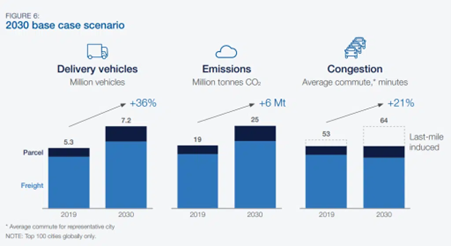
Our increasing expectations for speed and convenience, with the promise of “next-day delivery” are causing this rise in carbon emissions. In order to facilitate fast deliveries, companies cannot wait to be fully in stock of product before delivering, instead they are often required to send out trucks that are half-filled – this means more deliveries, more traffic, and more emissions.
To reverse this trend, consumers will have to stop expecting the convenience of same-day shipping and we must all collectively practice more patience in our consumer buying habits.
BOXES INSIDE BOXES
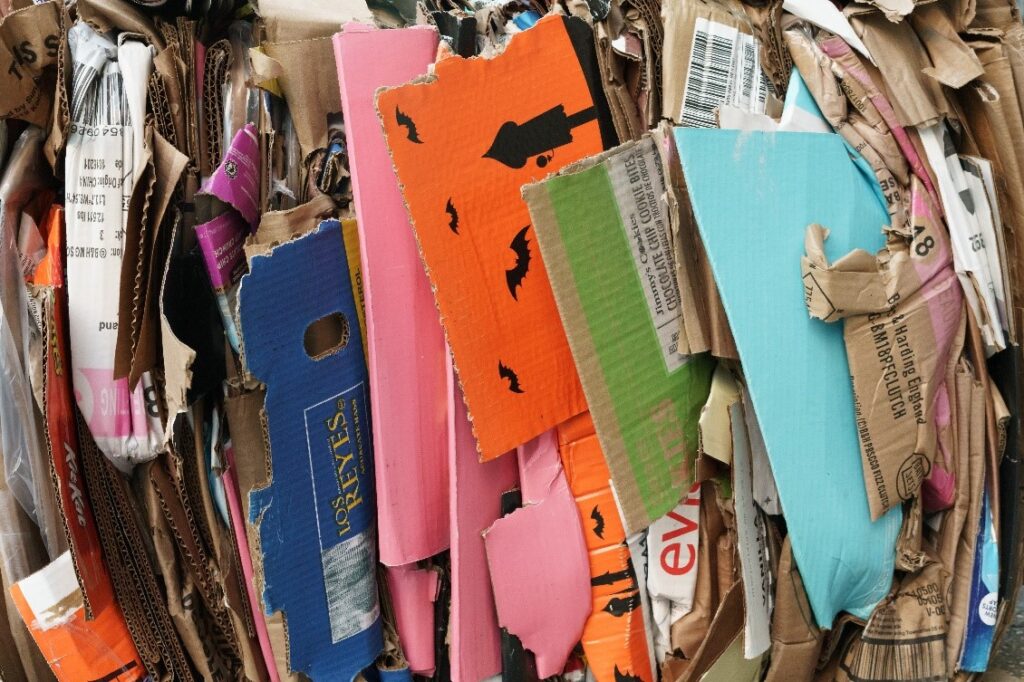
We’ve all had the frustration of opening an Amazon package only to find another box, or a set of items swaddled in unnecessary plastic or paper wrap, and grumbled at the excess packaging. Well, this wasteful packaging is also the biggest driver of carbon emissions, contributing 45% of greenhouse gas emissions worldwide from online shopping.
CONSCIOUS CONSUMER
When it comes to the eco-friendly R’s the ones to follow are Refuse, Reduce, Reuse, Repair. For many of us living in richer countries, such as the UK, our lives are full of excess stuff we don’t need, so by choosing to buy less and repair more of the current items we have, we will use up fewer resources and produce less waste.
Human numbers tragic impact of on six iconic wildlife species
It seems to me that the natural world is the greatest source of excitement; the greatest source of visual beauty; the greatest source of intellectual interest. It is the greatest source of so much in life that makes life worth living.”
– Population Matters patron, Sir David Attenborough
4 OCTOBER 2023
Human population growth is driving our most loved animals to extinction. Since 1970, the global human population has increased from 3.7 billion to now over 8 billion. In the same time frame World Wildlife Fund’s Living Planet Report 2022 reported that global wildlife populations have plummeted by 69% on average.
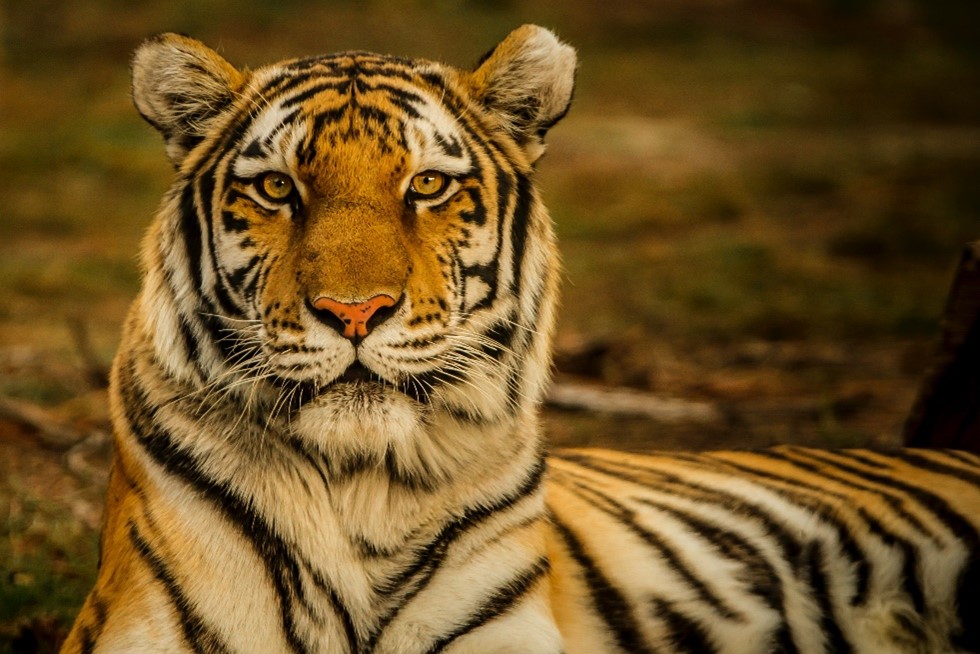
TIGERS
Tigers were first listed as endangered in 1986. And 37 years later, these iconic big cats are still on the IUCN Red List, with only 5,000 left in the wild.
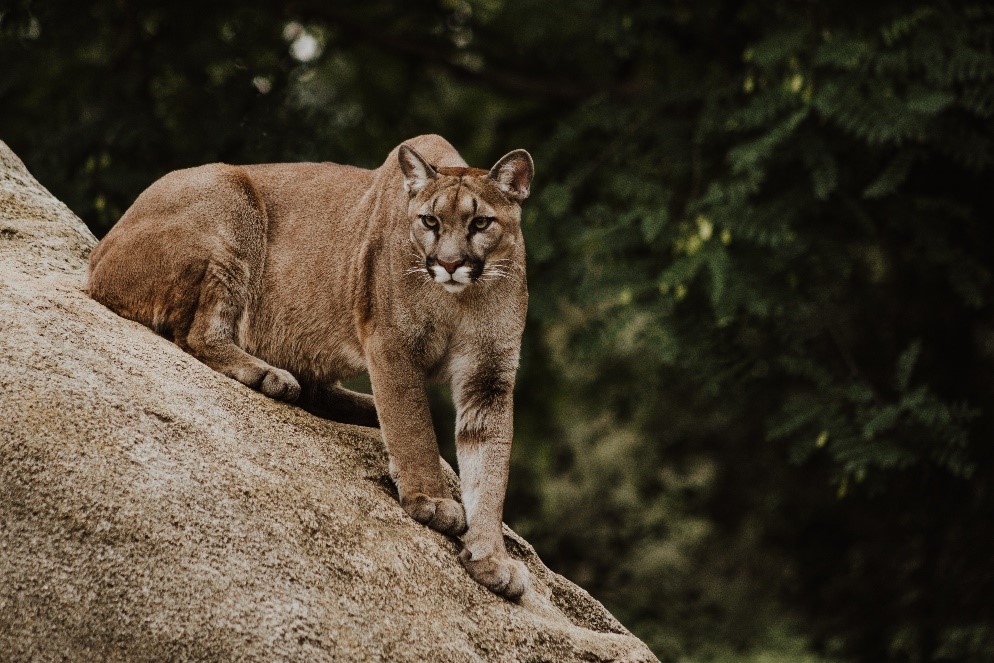
MOUNTAIN LIONS
America’s big cats go by many names – cougars, panthers, pumas. But this icon may soon disappear, as the American wilderness continues to be parcelled up and tarmacked over,
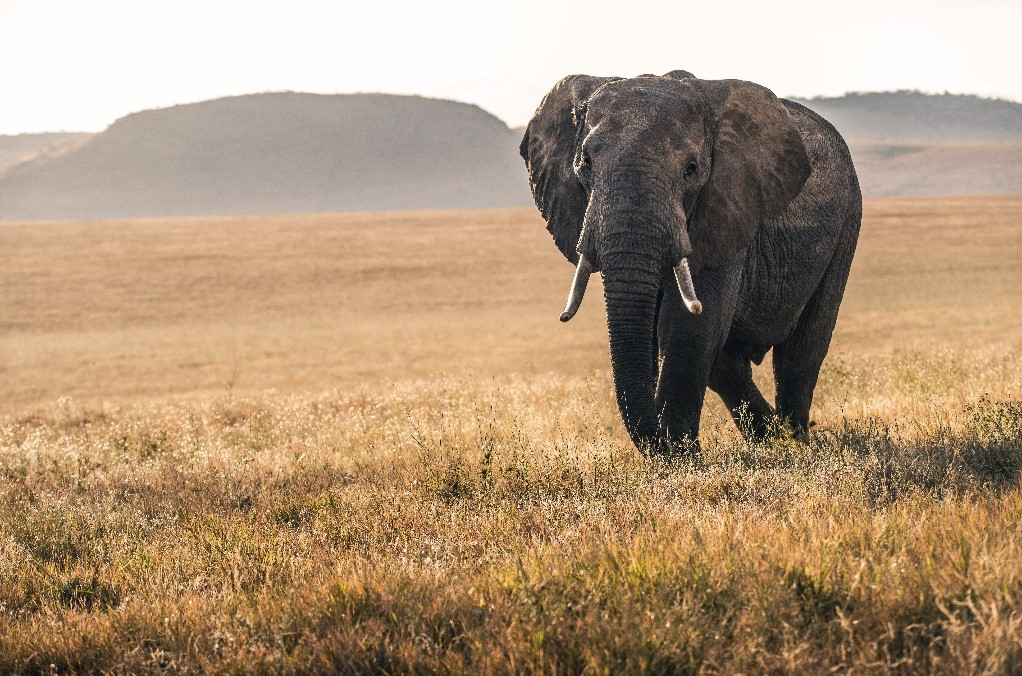
ELEPHANTS
With deep familial bonds and sophisticated cultural displays, from raising each other’s young, to even having funerals, elephants are a species worth not only our admiration, but also our respect. However, the biodiversity crisis leaves no creature, big or small, untouched, with the African savanna elephant classified as endangered.
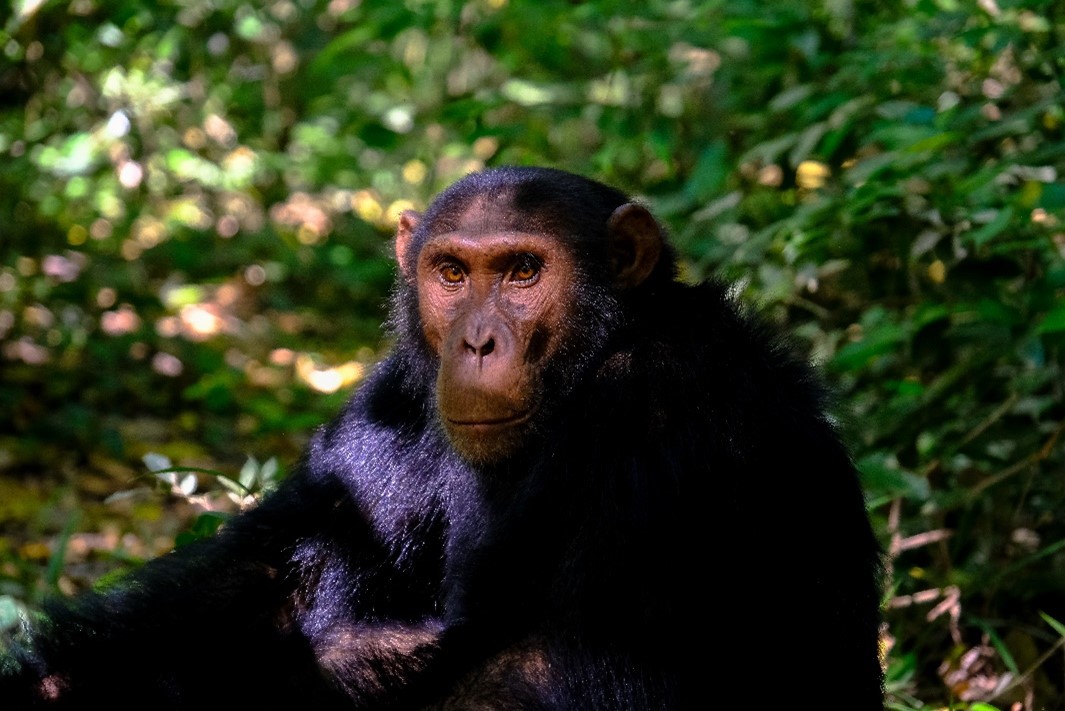
CHIMPANZEES
Chimpanzees, more than any other living creature, have helped us to understand that there is no sharp line between humans and the rest of the animal kingdom.”– our patron Dr Jane Goodall
We share a remarkable 98.7% of our DNA with chimpanzees, and like us, chimpanzees are noted for their adept tool making and problem-solving skills. However, even this intelligent and adaptable species is struggling to survive, due to the incessant pressures imposed by expanding human settlements. In 2016, the IUCN updated its classification of the western chimpanzee from “Endangered” to “Critically Endangered”.
ORCAS
Even underwater, the footprint of humankind is felt. The southern resident orca is a subspecies of orca that lives off the Pacific Northwest Coast. As of April 2023, the population numbers only 73 individuals. A critical habitat for their survival is the Salish Sea, at the US and Canadian border. This body of water is also one of the busiest shipping routes in the world.
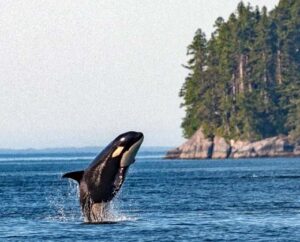
The Salish Sea hosts commercial vessel traffic, including fuel tankers, fishing boats and barges. All these vessels create a lot of underwater noise, and it’s disturbing the local residents. Several studies have confirmed these orcas are deeply affected by underwater noise pollution. In the same way it’s hard for two humans to hear one another by a busy road, noise generated by vessel propulsion can mask sounds that marine mammals use to communicate, navigate, find mates, and hunt for food. With its primary prey, the Chinook salmon, already decimated by overfishing and habitat destruction, these orcas simply cannot get enough food.
HEDGEHOGS
It’s truly a shame to say, the UK has become one of the world’s most nature depleted countries, with only 50.3% of its wildlife remaining. The State of Nature 2023 report has declared that 1 in 6 species in the UK are at risk of extinction.
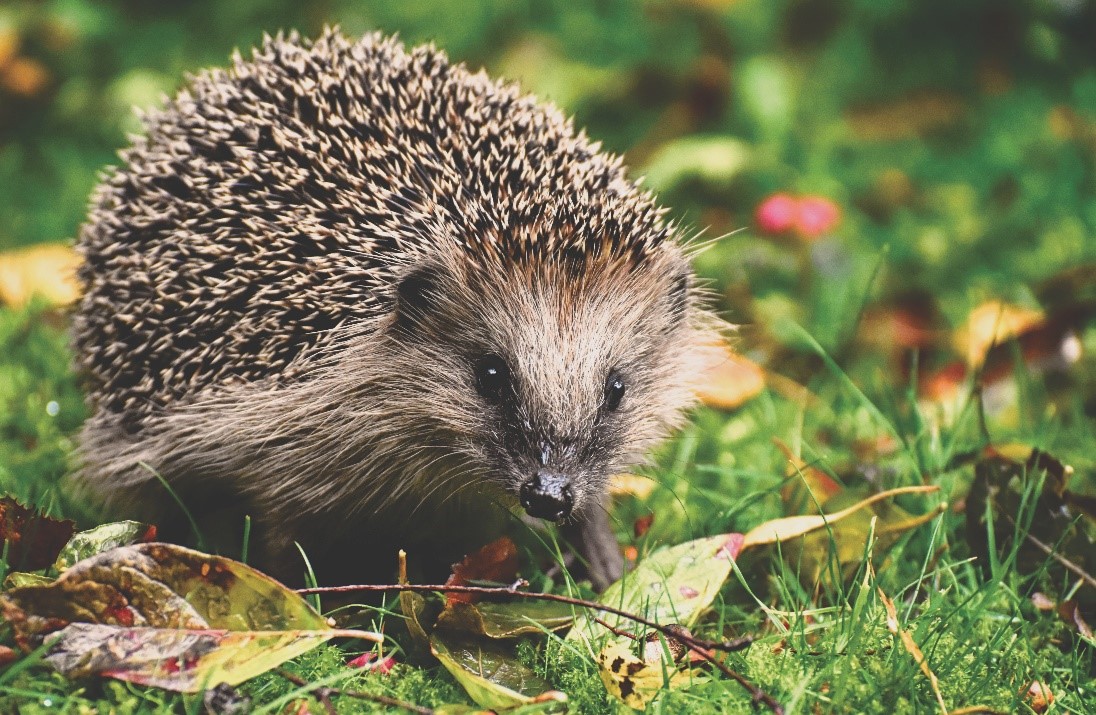
Download the full report here.
| David Attenborough speaks the truth |
| On the release of his new series, Planet Earth III, David Attenborough has labelled the amount of space humanity takes up as ‘selfish’.
“The huge problem is the way we have gobbled up space as though it belongs to us and nobody else. And the notion that you should actually have to restrain yourself in order to accommodate the natural world is not one which everybody feels.” |
World’s freshwater aquifers being depleted faster than being replenished.(Supplied: Juan Haro, UNICEF)
25 October 2023
A majority of the world’s major freshwater aquifers are being depleted at rates faster than they are being replenished. Two billion people rely on them for drinking and agriculture. When wells run dry, important global food bowls could be destroyed — something that has already happened in Saudi Arabia and is predicted to start happening in the US this century and India this decade.
Numerous global systems humans rely on for survival — including ecosystems, groundwater, insurance and the space industry — are on the precipice of catastrophic tipping points, according to a new report by the United Nations University.
The report says the world is “perilously close” to triggering these tipping points that could have “irreversible, catastrophic impacts for people and the planet”.
Plastic waste on a beach in the Wessel Islands Archipelago, off the Northern Territory coast.(Supplied: Charles Darwin University)
But there is some positive news.
The authors of the Interconnected Disaster Risk report say that by knowing these thresholds are looming, we have an opportunity to avert their worst effects.To do that we must exploit “positive tipping points” — changes that have cascading and self-perpetuating positive impacts on society, and could bring about the shifts needed to ensure our survival, the authors say.
The report warns whole societies will have to make “unprecedented” changes to avert disaster, but says the actions of individual people do play a significant role in influencing positive tipping points.
“We must recognise our role within interconnected systems and understand that our actions and choices matter, for better or for worse,” it says.
Walking the ‘cliff edge’
“Some tipping points trigger abrupt changes in our life-sustaining systems that can shake the foundations of our societies,” says the report, authored by five researchers from the UN University in Bonn, Germany.
The report highlights six such points, all highly relevant to Australia.
The six tipping points are:
-
- A chain reaction of ecosystem collapse: Key extinctions of species that many other species rely on will trigger a cascade of extinctions leading to the collapse of ecosystems that humans rely on for food, water and livelihoods.
- Groundwater depletion: A majority of the world’s major freshwater aquifers are being depleted at rates faster than they are being replenished. Two billion people rely on them for drinking and agriculture. When wells run dry, important global food bowls could be destroyed — something that has already happened in Saudi Arabia and is predicted to start happening in the US this century and India this decade.
- Mountain glaciers melting: Climate change is causing glaciers on top of mountains to retreat, lowering the fresh water supply for 870 million people that rely on them, and impacting 1.9 billion people.
- Space junk destroying the space industry: By the end of the decade, the number of satellites orbiting the Earth could increase more than tenfold. As that happens, a collision between just two satellites could create thousands of pieces of debris, which would trigger many more cascading collisions, resulting in all existing satellites being destroyed and making future space activities impossible.
- Unlivable heat: When climate change drives temperature and humidity in a location above a certain point, the human body is unable to survive unscathed for more than six hours. That threshold has been crossed in Pakistan and the Persian Gulf several times, mostly since 2003. As it happens more, people will die and health systems will be impacted.
This company is so important, the world could go to war over it.
19 August 2023
Microchips run everything. They’re in your phone, your car, your microwave — there might even be one in your kettle.
The best microchips in the world are made by TSMC, the Taiwan Semiconductor Manufacturing Company.
TSMC is so good, they’ve put Western tech companies and Western militaries streets ahead of China — and China is not happy about it.
So how did TSMC become the most important company in the world, and how could that bring the United States and China to the brink of war?
The TSMC factories in Taiwan are incredibly sterile and efficient.(Reuters: Ann Wang)
The birth of an idea
In 1958, a then 27-year-old Morris Chang was working at a microchip factory in Dallas belonging to Texas Instruments, and he had a problem. The process of making microchips was so complex, almost none of the chips were working correctly.
Morris Chang, a Harvard-educated man who fled from China as a teen, started fiddling with the factory’s settings, and within weeks, the factory’s yield was up to 20 per cent, then 30 per cent.
His bosses noticed how successful he’d been, and promoted him. Texas Instruments paid for him to get his PhD and they gave him bigger and bigger responsibilities.
Microchips are probably the hardest thing in the world to manufacture.
They require unbelievably complicated and expensive machines, running in the cleanest environment on Earth.
Morris Chang thought the tech companies should focus on designing the microchips, and outsource the actual manufacture to a company that specialises in it. Chang suggested this to Texas Instruments over and over, but they never budged.
Birth of TSMC
Then the Taiwanese government offered Morris Chang a blank cheque to build a company that would make Taiwan the microchip capital of the world — the place all tech companies go to get their chips made. They weren’t going to design a perfect microchip. They were going to design the perfect microchip factory.
And thus, the Taiwanese Semiconductor Manufacturing Company was born, with Morris Chang at its head.
Morris Chang founded TSMC, the world’s largest contract chipmaker.(Reuters: Nicky Loh)
TSMC dominates the industry
Forty years on from when it was first founded, TSMC is now making the smallest chips in the world. In the chip world, smaller means not only that they take up less space, but they’re also more energy efficient and powerful. And TSMC can make them faster than anyone else.
TSMC makes minuscule microchips that power phones, laptops and missile systems.(Pexels: Poko Rie)
TSMC pumps out close to 60 per cent of the semiconductor chips used around the world and makes 90 per cent of the most advanced technology used in phones and laptops all the way to missile systems.
It’s an extraordinary situation — you’ve got a resource that’s needed for basically everything in the modern world coming from one place, making it the most valuable and indispensable chip company in the world.
The Taiwanese media calls TSMC the “sacred mountain protecting the island” from invasion by Communist China.
But is it actually protecting them, or is it a giant target?
ACT NOW: Protect our Indian Ocean marine life
20 September 2023

We strongly support the globally-significant Christmas Island and Cocos (Keeling) Islands Marine Parks in Australia’s Indian Ocean Territories and have witnessed the immense and diverse marine creatures that inhabited those water in the 70s and 80s aboard our sailing yacht Banyandah.
The sanctuary zoning of Australia’s Indian Ocean Territory (IOT) marine parks makes them some of the world’s biggest, and best protected marine areas in the world. This is a huge achievement for Australia.
We support the current zoning plans – co-designed with the island communities – which protects 739,000km2 of Australia’s waters around the islands, while supporting the islanders’ local fishing in the nearshore so vital to the islanders well being.
The size and high level of this sanctuary protection will help safeguard one of the most unique and threatened marine bioregions in Australia, and significantly contribute towards Australia’s commitment to 30% protection of our marine estate by 2030.
The marine parks cover one of the most under-protected marine environments globally. Compared to other marine environments, pelagic environments have relatively few regulatory mechanisms to protect biodiversity and most management actions are associated with fisheries management. The IOT marine parks are a significant step towards enhancing conservation benefits for the pelagic environment globally.
ACT NOW by adding your name to the submission HERE
Researchers wonder why whales beach themselves
26 July 2023
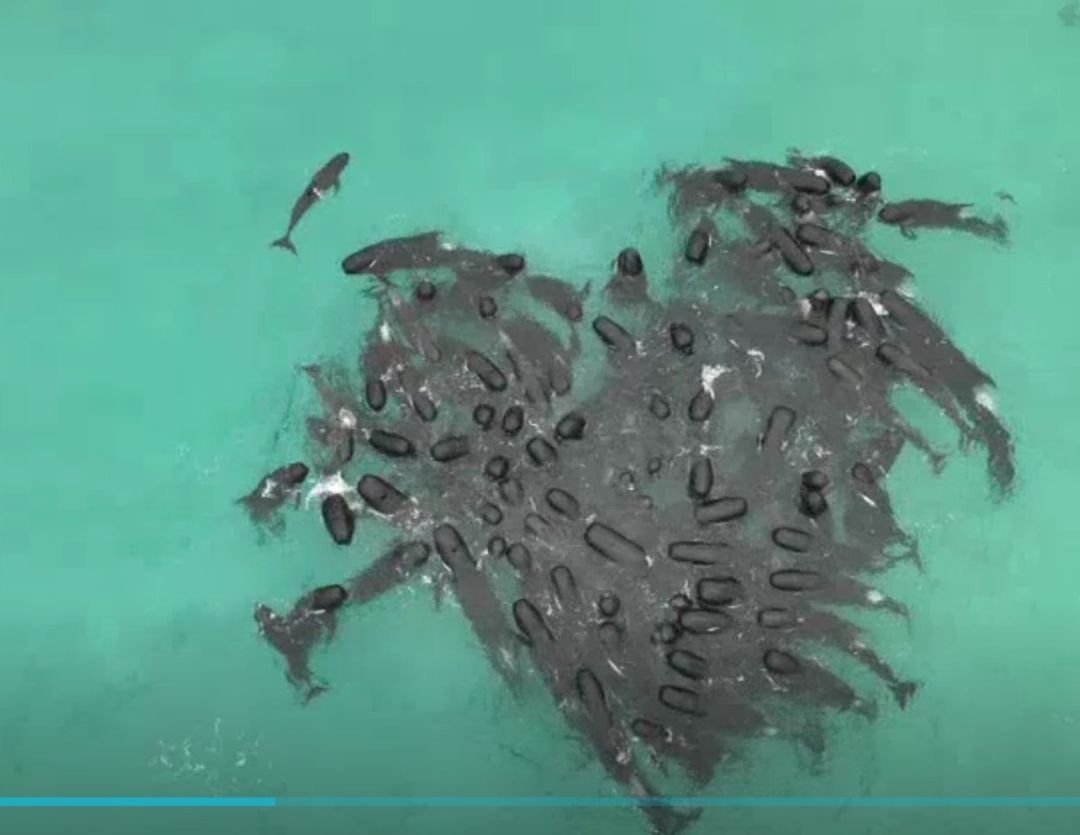
GROUP HUG BEFORE GIVING THEIR LIVES IN PROTEST –
The pod of 97 pilot whales massed close to the shore at Cheynes Beach, 470km south of Perth, late on Monday, before most of them died after beaching themselves the next day.
Despite desperate attempts by authorities and volunteers to herd the surviving whales back out to sea, more than half the animals had to be euthanased on Wednesday evening.
“To see behaviour like this pre-stranding behaviour that we now have a bird’s eye view of is incredible,” Dr Pirotta said.
Jack and Jude say – Humanity looks in the mirror and think themselves the superior creature instead of looking beyond to admire the creation. In doing this we have wrecked vast lands, exterminated entire species, and polluted the creation with our garbage that poison the air, water and land. And we mass produce our specie with little thought given to the deteroment of the precious Earth and her magnificent other creatures. Has anyone else thought this might be a test we are failing?
‘We are damned fools’
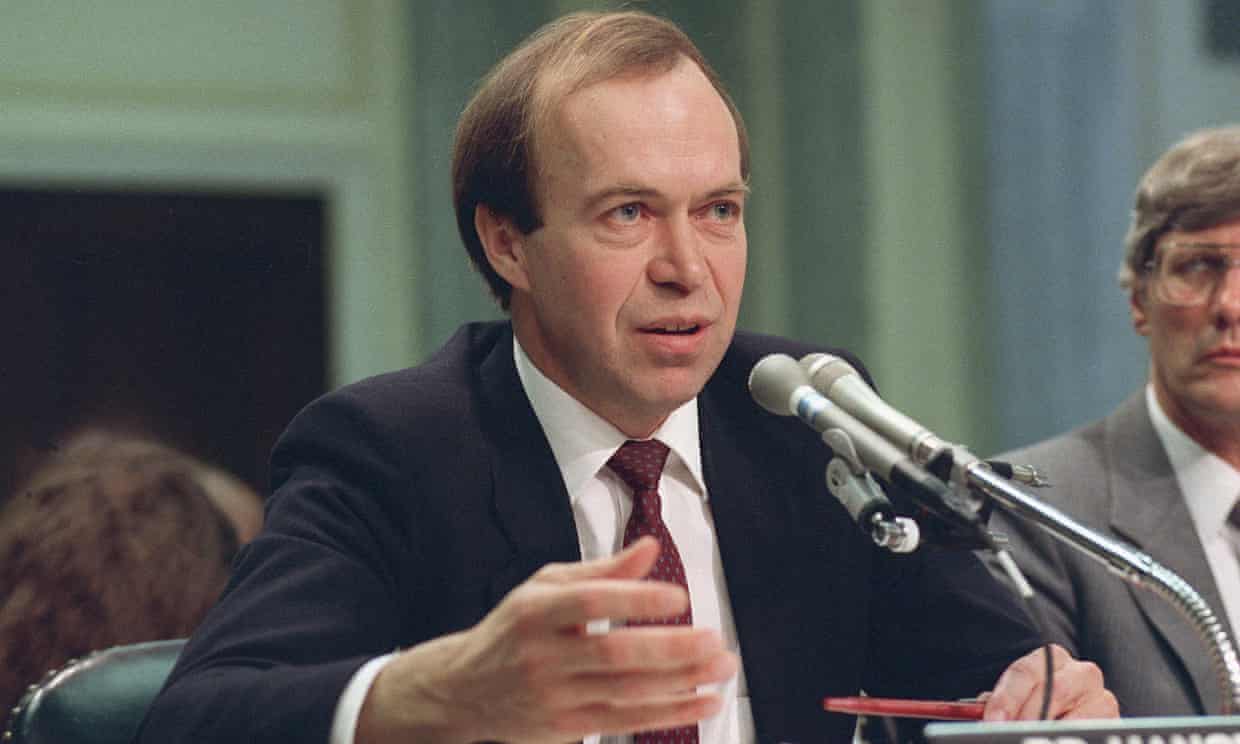
Hansen testifies before a Senate subcommittee in 1989, telling the world that global warming was here and would get worse. Photograph: Dennis Cook/AP
19 July 2023
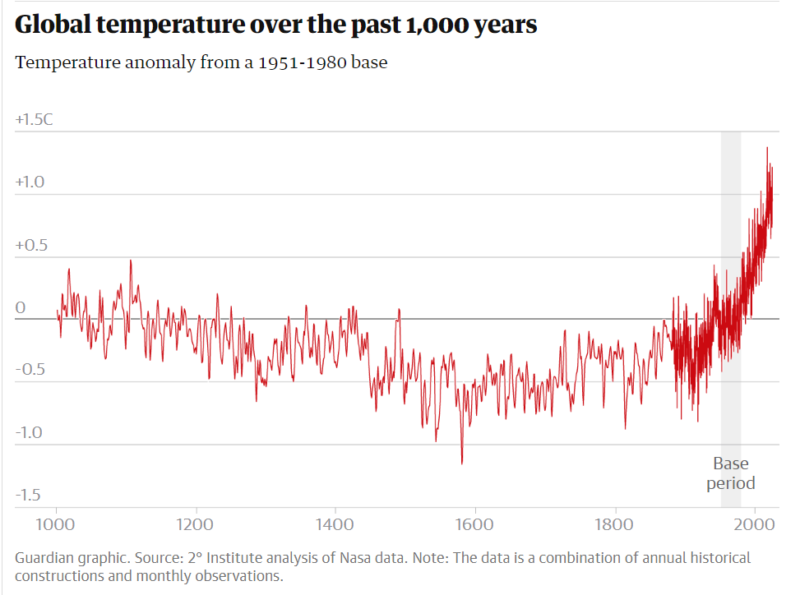
James Hansen was a NASA climate scientist when he alerted the world to the greenhouse effect in the 1980s, warning lawmakers of growing global heating. He now says, “The world is shifting towards a superheated climate not seen in the past million years, prior to human existence, because we are damned fools for not acting upon warnings over the climate crisis.”
“There’s a lot more in the pipeline, unless we reduce the greenhouse gas amounts,” says Hansen, who is 82. “These superstorms are a taste of the storms my grandchildren will endure. We are headed wittingly into the new reality – we knew it was coming.”
Hansen has argued in a new research paper that the rate of global heating is accelerating, even when natural variations, such as the current El Niño climatic event that periodically raises temperatures, are accounted for. This is due to what he said was an “unprecedented” imbalance in the amount of energy coming into the planet from the sun versus the energy reflected away from Earth.
While global temperatures are undoubtably climbing due to the burning of fossil fuels, scientists are divided over whether this rate is accelerating. “We see no evidence of what Jim is claiming,” said Michael Mann, a University of Pennsylvania climate scientist who added that the heating of the climate system had been “remarkably steady”. Others said the idea was plausible, although more data was required to be certain.
“It’s maybe premature to say the warming is accelerating, but it’s not decreasing, for sure. We still have our foot on the gas,” said Matthew Huber, an expert in paleoclimatology at Purdue University.
https://www.theguardian.com/environment/2023/jul/19/climate-crisis-james-hansen-scientist-warning
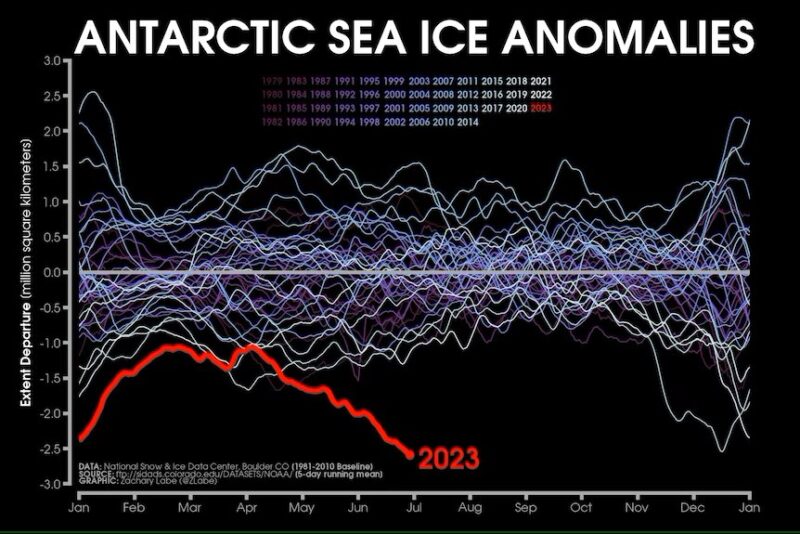
This year the Antarctic sea is well below all previous years.
2023 and 2024 increasingly likely to become warmest years on record
8 August 2023
With records breaking, it looks increasingly likely that 2023 will become the hottest on record.
After May it was sitting in fourth position, behind 2016, 2017 and 2020, but June was the warmest on record, followed by a record-warm start to July.
While the year began with La Niña, the recent upswing is causing this year’s ranking to climb rapidly, a trend expected to continue as the Pacific transitions into El Niño.
During El Niño, the equatorial Pacific is warmer than normal, and this leads to additional heat being shifted from the ocean into the atmosphere.
Based on historical figures of how El Niño years evolve, along with the recent spike in global temperatures, 2023 looks more and more likely to pass 2016 as the Earth’s warmest year.
And if historical trends continue, 2024 is likely to be even warmer because the highest temperatures in an El Niño cycle normally arrive in the second year.
This was evident during the last El Niño, which developed in 2015 and delivered a record-warm year in 2016.
RELATED STORIES: Temperatures hit “Unthinkable” highs at both poles – Climate scientists are trying figure Why?
This video clearly explains the effects of Climate Change on Australian weater and why we’re having intense dry spells alternating with extreme wet causing floods.
 16 March 2023
It is exactly one month ago that GEORGE SOROS gave a speech on the eve of the Munich Security Conference. Since then, so many remarkable things have happened – and have happened so fast – that it is worth comparing his predictions of a month ago with actual developments.
Here is his report:
The biggest changes have occurred in the global climate system. By this, I mean actual climate events and climate scientists’ understanding of those events. The main message I wanted to convey in Munich was that the global climate system is greatly dependent on what happens within the Arctic Circle. The Arctic Circle climate system used to be separate from the global climate system. Winds used to blow in a predictable counterclockwise direction; but, because of increased human interference, the separation between the Arctic climate system and the global climate system no longer prevails.
Indeed, cold air now leaks from the Arctic Circle and is replaced by warm air sucked up from outside. Consequently, the Arctic Circle has warmed up four times faster than the rest of the world over the last four decades, and the rate of warming is dangerously accelerating. Since my speech, temperatures in the Arctic Circle have soared over 20º Celsius above normal, setting records and intensifying concerns about the rate at which the Greenland ice sheet is melting.
National Snow and Ice Data Center Ice Scientist Matt Meier said, “What likely happened was a big atmospheric river pumped in warm and moist air from the Pacific southward.
And in the Arctic, which has been warming two to three times faster than the rest of the globe and is considered vulnerable to climate change, warm Atlantic air was coming north off the coast of Greenland.
Climate scientists’ understanding of the warming process has also taken a big step forward. They have been able to prove that the release of methane, a far more potent and dangerous greenhouse gas than carbon dioxide, is greater than can be explained by the sources of emissions associated with human activity. This finding implies the existence of other sources – for example, increasing methane emissions from the warming permafrost – result from human disturbance of nature.
An increasing number of climate scientists believe it would be appropriate to declare a climate emergency, because, at the current rate, global warming is bound to exceed 1.5ºC. As Sir David King, chief science adviser to the British government under Gordon Brown and currently the head of the Climate Crisis Advisory Group, said last month, we need to “reduce emissions rapidly and remove excess greenhouse gases, but, most importantly and urgently, refreeze the Arctic.” That’s quite a large program, given the fact that we are already behind schedule.
EPA confirms salmon giant Tassal tried to stop release of report on antibiotic use in fish farms
27 February 2023
“Tasmania is years behind the times in terms of international health regulations. No broadscale use of antibiotics in animal feed should be allowed.” Dr Rosalie Woodruff MP said.
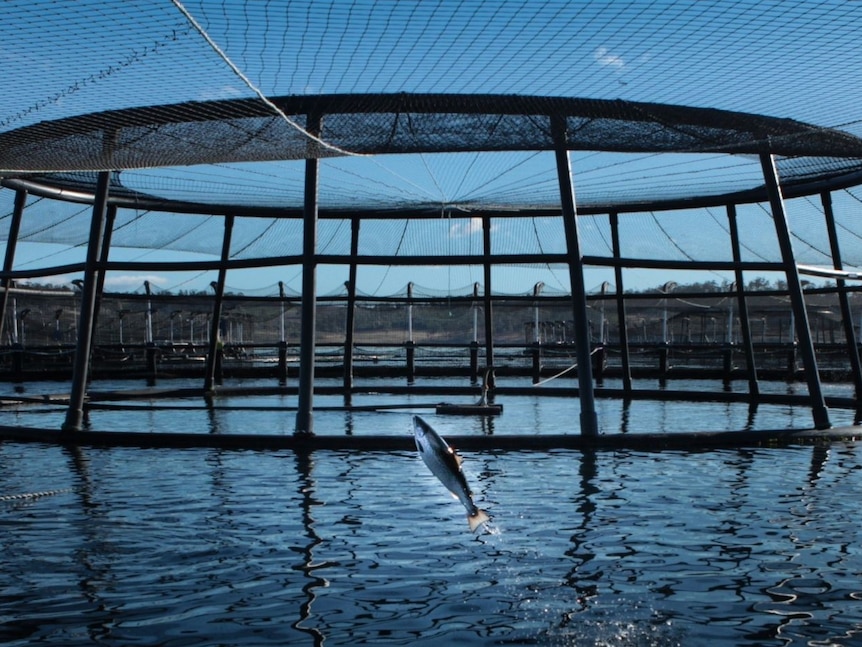
Tassal earlier tried to block the release of information about the use of 1.3 tonnes of antibiotics at its Okehampton Bay leases, on the state’s east coast.
“Antibiotic use through fish feed should be banned in Tasmanian waters. We should move to vaccination, which is what the WHO recommended years ago.” MP Rosalie Woodruff said.
Elevated antibiotic levels had been found in native fish caught near fish pens, but EPA director Wes Ford said the medical advice was the risk to public safety was low.
Asked whether there was a need for real-time reporting to alert fishers to areas with high antibiotic levels, he did not rule it out. “That’s a discussion that still has to continue,” Mr Ford said.
“At the moment the government has put out an environmental standard for public comment and that’s the sort of feedback we are looking for in terms of a draft environmental standard.
“At the end of the day, the advice from the scientists, both from a public health and veterinary medical point of view, is that the risk to the public is very low and notification hasn’t been required for public health reasons.”
Mr Ford said since 2016, fish farmers had treated bacterial outbreaks with antibiotics nine times, but many of those instances had not been reported on because it was not required.
Greens environment spokeswoman Rosalie Woodruff said it was a “grotesque failure” of regulation.
“We won’t be satisfied until there is real-time reporting of antibiotic use,” she said.
Antibiotic use ‘very rare’, Premier says
My understanding is the use of antibiotics in the salmon farming industry is very rare. Of course, it’s a matter for the EPA, and it’s a very strict and rigorous process,” he said.
“I know there are a number of people in Tasmania who don’t want the industry, but I’m not prepared to accept that.
“I want to support the many thousands of people that are employed in the industry, and one of the ways we can do that is ensure there is public confidence in the industry.”
Dash for African oil and gas could wipe out Congo Forests
10 Novemeber 2022
It’s one of the most famous and extraordinary places on Earth. The Virunga National Forest, established in 1925, is now an UNESCO World Heritage Site. This area, nested in the Congo Basin, is Africa’s oldest national park and is home to the only mountain gorillas left on the planet. But parts of this precious land are now up for auction.
Absorbs 4 percent of the world’s annual carbon emissions
In an auction announced last May, the Congo is selling 30 oil and gas drilling blocks across the Congo Basin, including some in the Virunga Park. The Congo Basin covers 1.3 billion acres spanning six nations. Its trees and soils and peat absorb about 4 percent of the world’s annual carbon emissions.
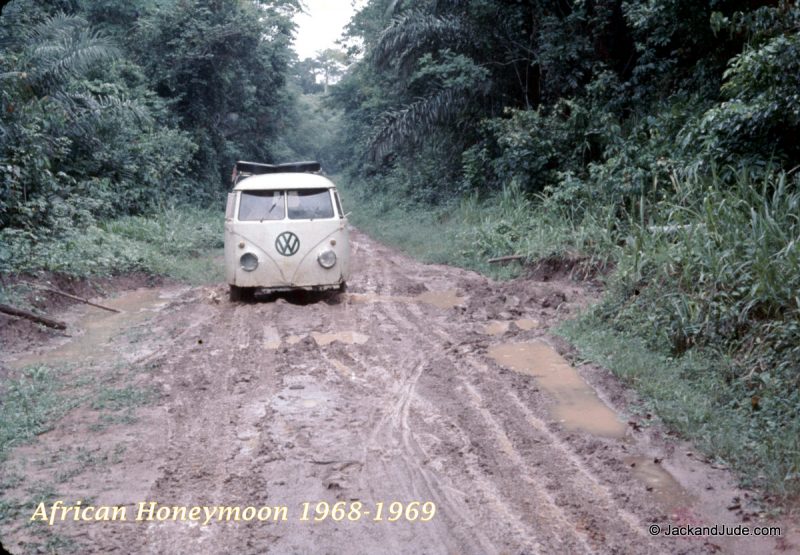
Jack and Jude witnessed the Congo Rainforest
When Jack and Jude were kids back in1969, we witnessed the magnificences of the Congo Rainforest in its original prime condition when driving a clapped-out VW combi van down through Africa and through thick forests filled with all kinds of wildlife interspersed by very few humans. While exploring this untouched jungle, our young minds imagined us to be the young explorer Doctor Livingston. African Honeymoon, due to be published in 2023, is the last book of a trilogy tells the story of these naïve newlyweds’ year-long adventure that eventually brought us to Australia.

David Livingstone attacked by a lion in Africa.
Credit: Wellcome Library, London.
World’s second largest forest under threat
A staggering 90% of the world’s dense forests are under threat from new fossil fuel investments in the Congo basin, the world’s second largest forest after the Amazon. This equates to 64m hectares (158 million acres) an area twice the size of Germany which overlaps with 150 existing or planned oil and gas exploration fields.
The executive director of Rainforest Foundation UK, Mr. Eisen says, “Oil and gas expansion poses a stark threat to the Congo basin forest and its millions of inhabitants who are the least responsible for the climate crisis. Achieving climate justice for them means polluting countries in the global north stepping up to rapidly decarbonise their own economies and supporting rainforest countries to transition to a low-carbon future,”
In 2005, African nations moved to protect Congo rainforest
At a meeting in Congo Brazzaville, also attended by French President Jacques Chirac, the heads of state agreed to a 10-year plan to protect the forests.
They said, “The threat’s real and immediate. For example, with Cameroon, they’ve already lost approximately 90 percent of their original primary forest,”
“In the Democratic Republic of Congo, it’s 80 percent of the original forest, and in Congo Brazzaville, that’s 70 percent. So very little of what originally existed remains.”
That was then in 2005. But now that they have road access crisscrossing this thick virgin forest, needing jobs and resources, who’s bothered by destroying another 4 percent of Earth’s carbon capture resource.
Jack and Jude plead with today’s youth NOT to trust adults to manage Earth’s resources. Centuries of only thinking about jobs and growth have tainted us. Come up with another way to manage our civilization that does not rely on increasing human population which requires more and more resources – which means less and less of Earth’s magnificent creatures. Don’t waste a moment or none will be here for your children.
The Ballina Flood and our Home >>>

Flood disaster at Ballina could have been avoided
Massively silted river not dredged for thirty years
The Richmond River at Ballina is extremely wide and slow moving in normal times. Once the second busiest port on the NSW coast, this river had many ships entering the port and a fleet of fishing vessels that could leave and re-enter on any state of the tide. But all that began to end in 1993, the year the NSW State Government last dredged the river mouth.
In the nearly thirty years since then, the river has become hugely impacted by growing sandbanks silting the river mouth that have made it the most treacherous on the east coast. No ships have entered this port in several decades, and the fishing fleet has dwindled to just a few that brave the treacherous entrance to bring their catch to market.
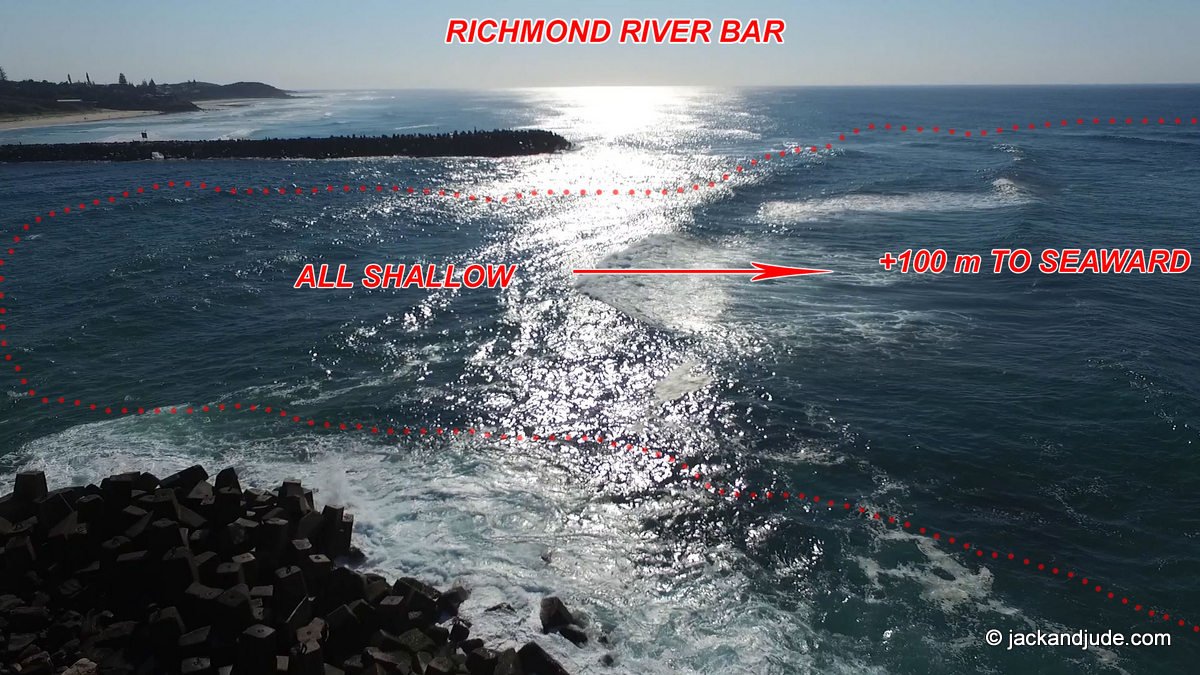
Last dredged in 1993
Ten months ago, Jack and Jude, two experts on oceans and waterways, warned the Ballina Council that a disaster was imminent unless the Richmond River mouth was dredged. Jack and Jude are master mariners working vessels around the world since 1974. When not afloat, they share life alongside the Richmond River these last thirty years.
In consultation with long-term residents, they raised the alarm to the impacted condition of the river mouth that had created an even greater problem than the treacherous entry. The restrictions at the river mouth have caused the river upstream to become alarmingly clogged by ever-growing sandbanks that massively slow the flow of the river.
Responsibility to keep the ocean exit clear ~
Jack and Jude believe Ballina, as the outlet for all the runoff collected in the massive basin that includes Lismore, Ballina, Kyogle, Woodburn, and Coraki, have a responsibility to keep the ocean exit clear and free flowing so the communities upstream are not more greatly impacted by flood waters being held up downstream.
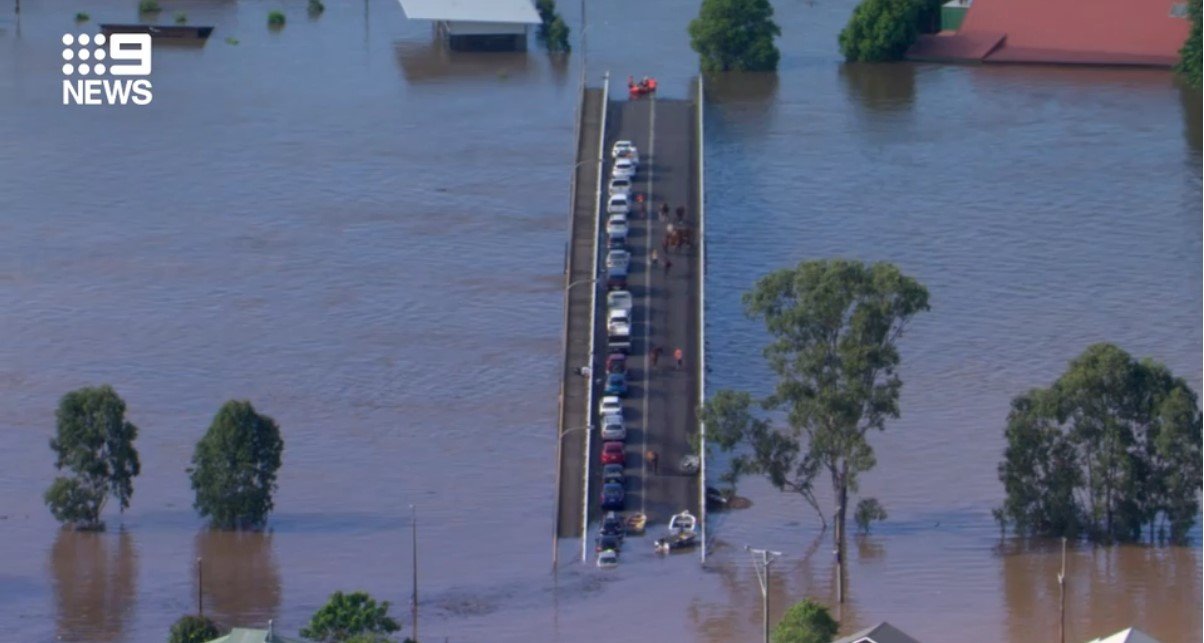
Woodburn bridge over the Richmond – 2022 Flood
They wrote to the Ballina Council with their concerns, but it took weeks for Council Officers to advise them that the NSW State Government is responsible for river maintenance. So, with that information, on the first of July 2021, Jack and Jude contacted the State representative for Ballina, The Greens party Tamara Smith, providing a detailed explanation of how in times of high river flows, such as the flood of 2017, fast waters that are restrained take the path of least resistance, which puts properties at risk of water inundation. At their house location, this had never happened in living memory.
It took Tamara Smith’s office three weeks to acknowledge receipt of their letter: “Your concerns have been passed onto a senior member of staff for further investigation and they will be in touch.”
But they were not in touch, except to say, “Tamara would like to make representations on your behalf to the Hon. Melinda Pavey MP – Minister for Water.”
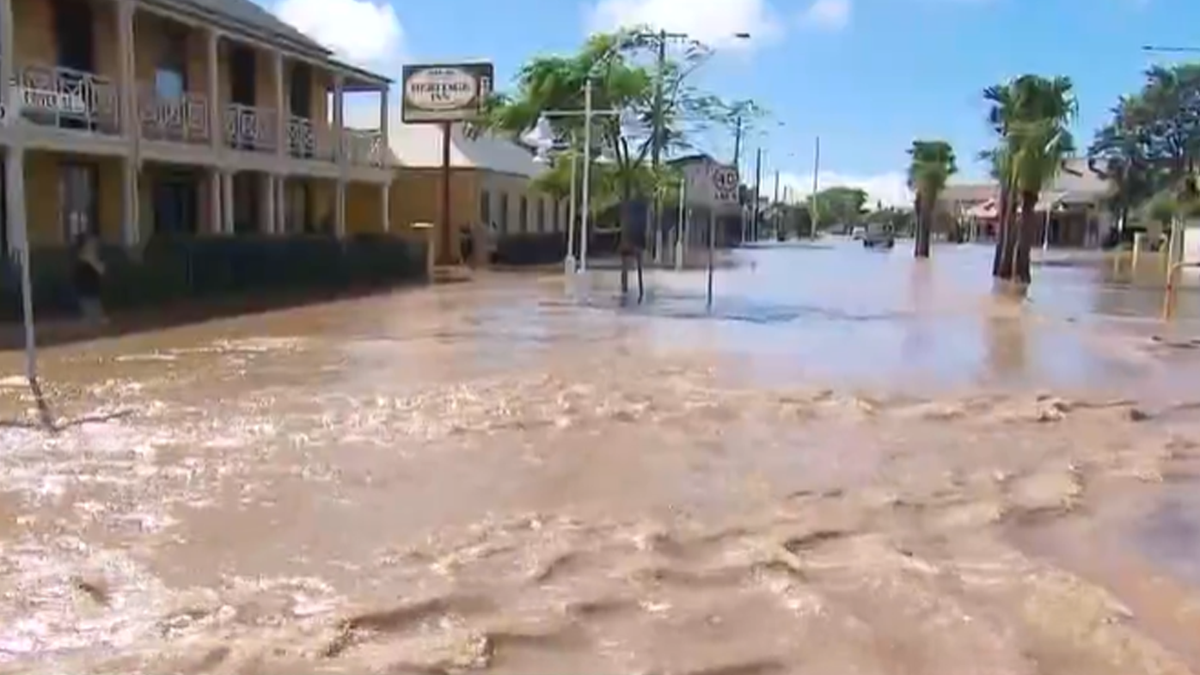
Ballina CBD – 2022 flood Ballina
No further replies ~
Each month thereafter, Jack and Jude wrote again, asking for an update, But they received none.
In September, their last communications brought this reply: “Your email has been passed onto Tamara and her senior team.”
Since then there has been no further communications from Tamara Smith, State member for Ballina.
And now, the house that Jack and Jude built with their own hands that sits alongside the Richmond River, as well as thousands upon thousands of homes of other residents, are awash with brown, swirling flood waters destroying property.
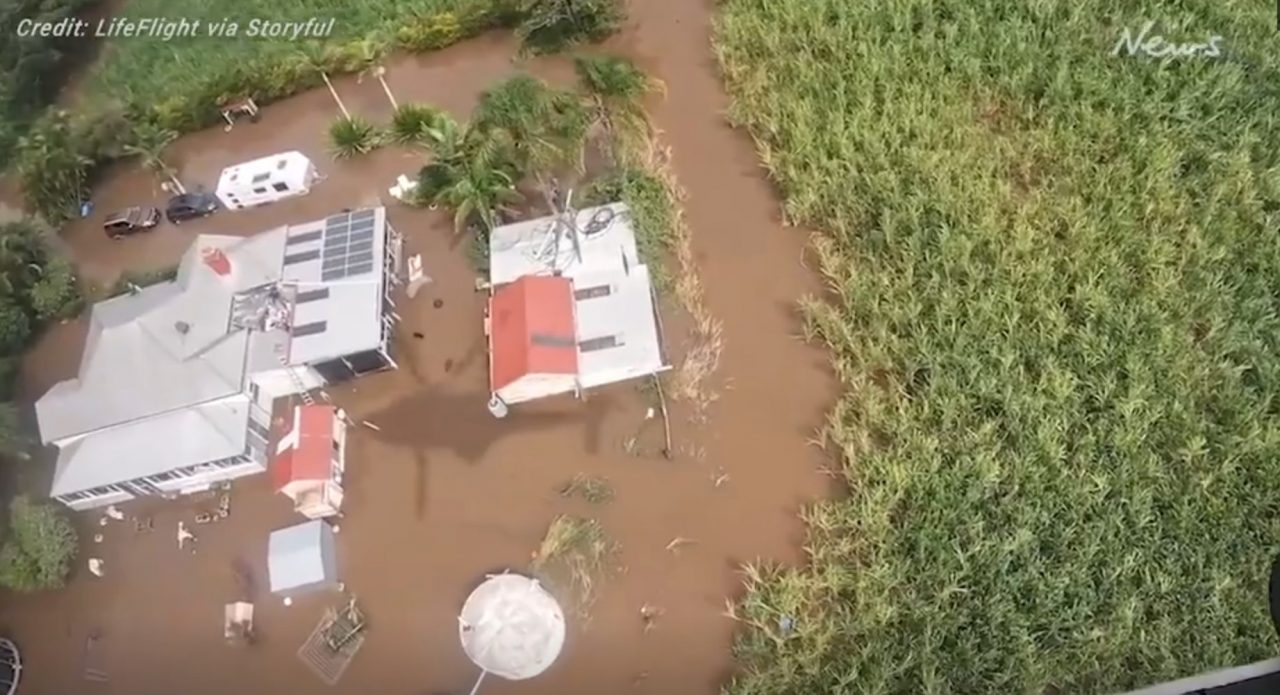
Air rescue of stranded family – 2022 flood Ballina
Well Aware of Nature’s Forces ~
Jack and Jude are well aware of Nature’s force having sailed around the world in a homemade boat, and by living alongside a river, seeing the changes in the river flow impeded by increasing sandbanks. They’re not alarmists, but realists wondering about the blindness of both local and government authorities these last decades when they ignore such obvious signals of imminent danger; the changing river mouth, water flooding Ballina streets through the drains, and the Burns Point Ferry being halted due to water over its access roads. If these authorities had paid closer attention, Ballina would have escaped severe flooding. And the village of Woodburn may have escaped the lingering high water, 2 m higher than ever before. Not to mention the less time underwater for roads and infrastructure, saving the council time in repairs and ratepayers’ money.
Put Earth First ~
While today’s mantra is all about jobs and growth, Jack and Jude say, for a return to a safer, less stressful life and better future for our children, Put Earth First in all our decisions.
The Ballina Flood and our House:
Some of our followers may know that we home-built Banyandah then sailed around the world in ‘ever-increasing circles’ for 15 years, home schooling our two sons along the way.
What few know is that upon our return to Australia in 1987, we purchased a bit of farmland alongside the Richmond River, just upstream from Ballina NSW.
Having spent our accumulated savings on the land, we continued to live afloat, anchored in Mobbs Bay. Our sons could row across the river to complete their high school education, while their parents went along the road to build a simple house from assorted materials; some new, the rest from salvaged materials. Back then, Peninsula time seemed thirty years behind, letting us trade labour for services and enjoy lots of help from the locals. Our sons also helped with the building and learnt basic carpentry, while acquiring both knowledge and he-man muscles.
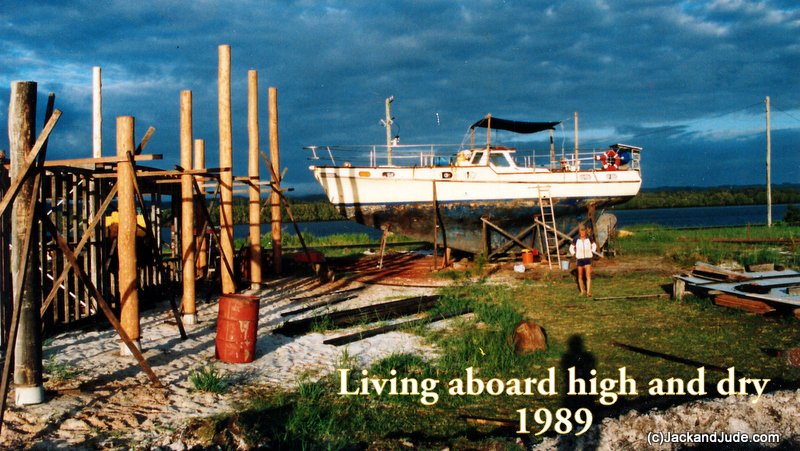
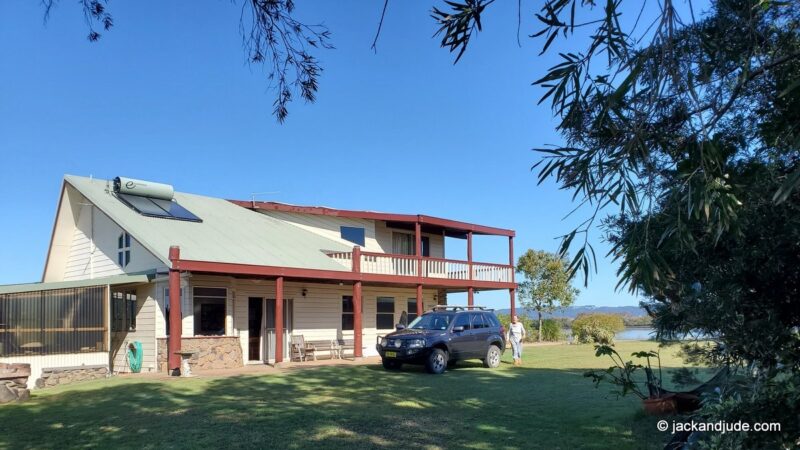
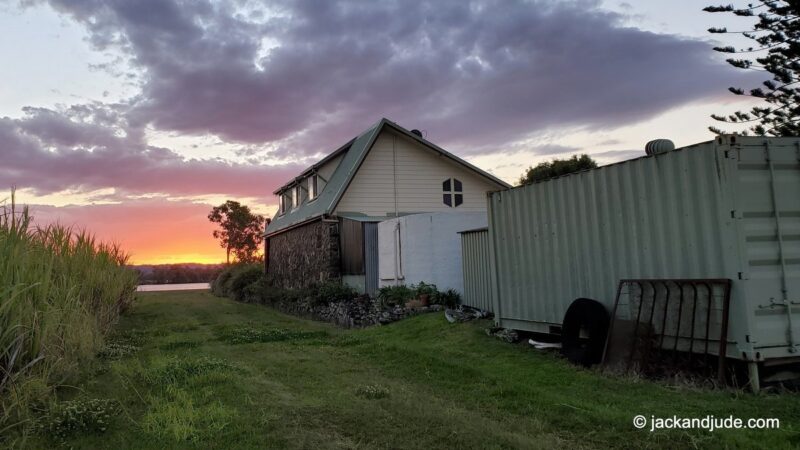
As the years zoomed past, we became more and more involved in local issues and joined a group fighting the rezoning of Ballina’s only marina that would allow a developer to carve up the land for house lots. The group established a petition in many Ballina businesses that received thousands of signatures. But when the matter came before the Ballina Council, the developer’s lawyers argued our petition was invalid because it contained an unsubstantiated claim that pleasure boating would diminish. The Council agreed, threw out the signatures and voted in favour of rezoning. They also told the public that they would build a new marina closer to the centre of town—Hmm, after nearly 30 years, that has yet to happen. What did happen, the hire boats, houseboat rentals, tour boats all collapsed. Plus, the marine fuel bowsers are gone.
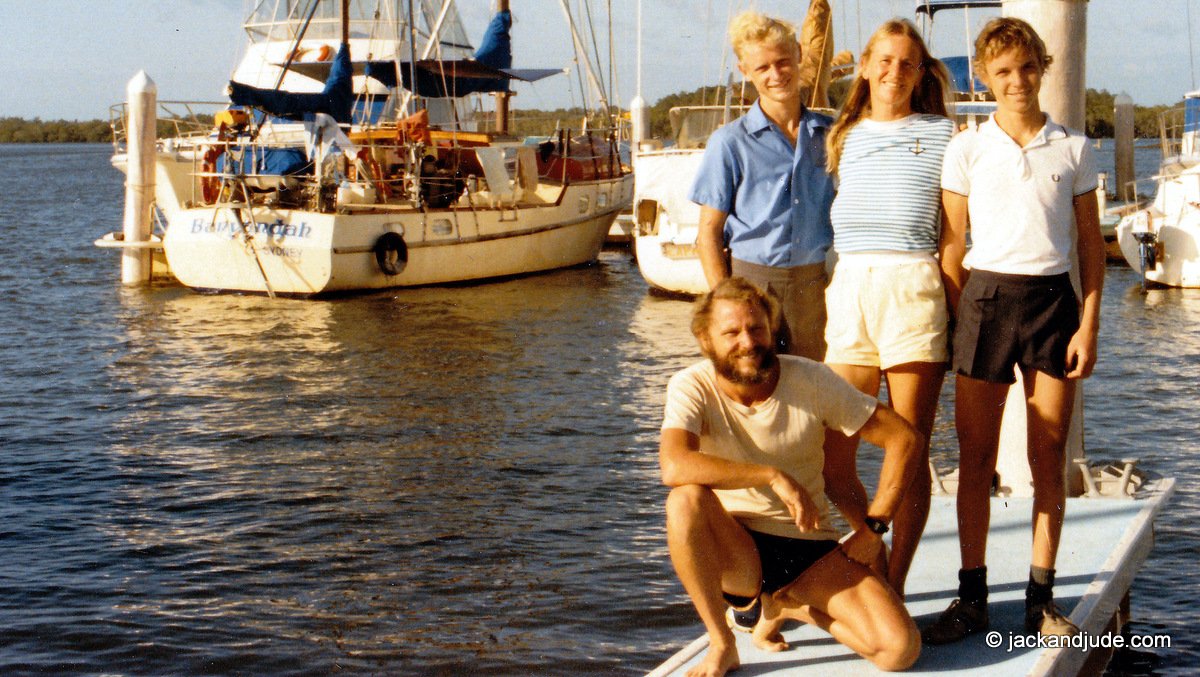
The defunct Ballina Marina – Banyandah and 4Js – 1987
After that, the river mouth began being neglected. Mobbs Bay, one of the safest swimming beaches for children on our side of the river, began to be undermined by sea surge toppling over the training wall. The wide, fine sand beach washed away and the casuarinas toppled over. But the council did nothing, and the community just couldn’t raise enough money in time to have Public Works fix the wall at our costs. Hmm, another bummer. We lost the safe swimming beach.
The devastation continued after the beach went when the spit washed away, taking with it the very best storm anchorage on the coast. Mobbs Bay is now so silted, the protection is shabby, with room for only a few shallow draft vessels. Hmm, we fondly remember living our first year of Ballina life in what was a quiet, landlocked bay.
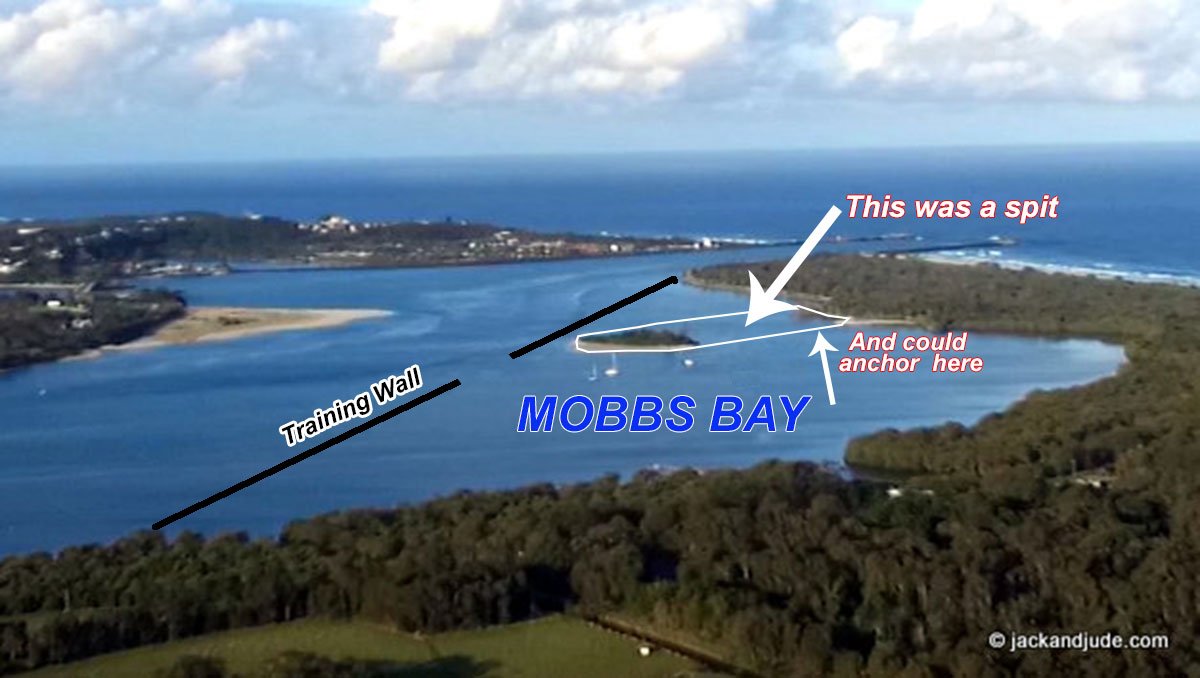
Mobbs Bay once was a child-safe swimming beach and safe haven.
Last dredged in 1993
There have been other troubles like riverbank erosion to the edge of the bitumen right near where a young girl lost her life after she drove into the river. In general, the council pays little attention to the sparsely populated south side. And, it’s fair to say our side is still in the go-slow zone. Quiet folk enjoying life little changed.
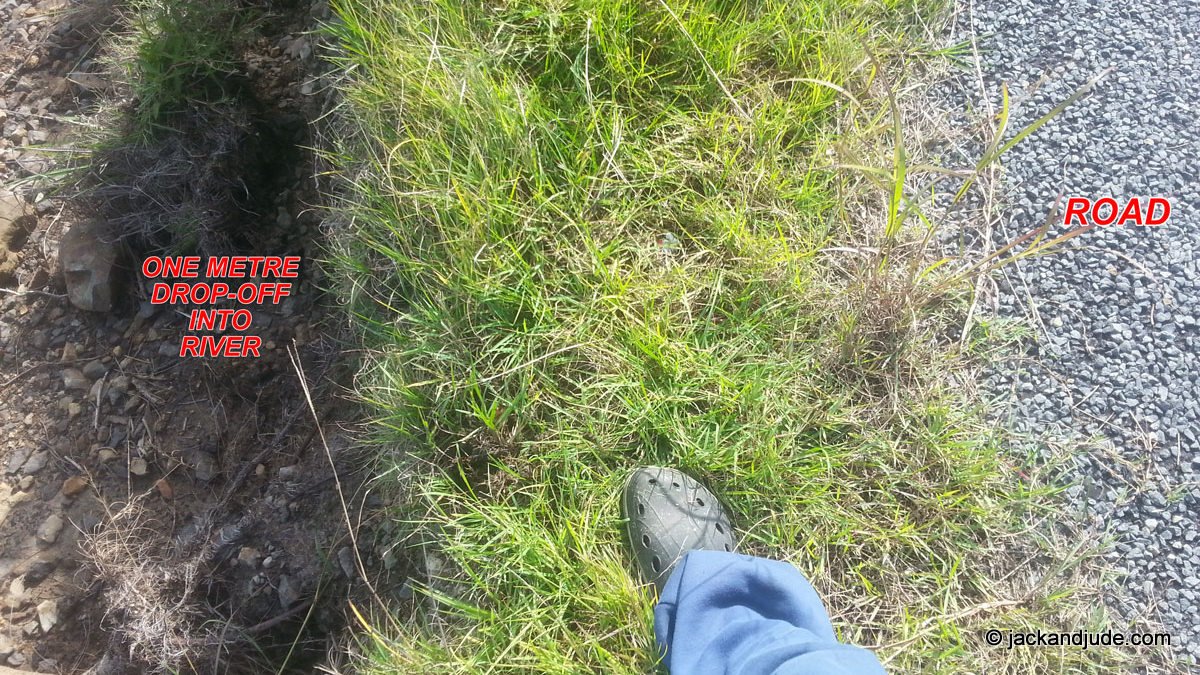
School buses use this road – limit 80 kph
But, Jack and Jude have widely travelled the world and can see everything is changing rather quickly. For decades, scientists have been warning of catastrophic events unless humanity reins in its pollution. The world started getting serious about this in the 1990s. But then, a bunch of wars erupted in the Middle East. What a mess — one filled with plenty of agony and sadness. That tragedy delayed any serious discussion on humans polluting the environment – that is, until ecosystems started seriously failing. Our great Aussie icon, the Great Barrier Reef, got bleached so many times it’s now whiter than the very best French laundry. And unprecedented forest fires in 2019 burnt away almost all the forests of northern NSW, as well as a lot of houses and infrastructure. But we humans keep adding more jets in the skies, more cars on our roads, more power plants to supply our greatly expanding population. And now we’re told by those that should know, Earth is at the tipping point. Reduce climate changing emissions by 40% in the next 8 years or Earth will suffer irrevocable changes. Hmm, we’ll see.
Some say, What’s the big deal? Only that humans have driven at least 680 vertebrate species to extinction since the 1600s. Scientists believe that pollution, land clearing, and overfishing will kill off half of the planet’s existing land and marine species by 2100. Humans have already taken most of the arable land, burnt and converted almost all the large native forests.
So this long-winded diatribe comes to its pointy end by saying that a year ago we warned the almighty powers that the Richmond River was so impacted by sandbanks, a catastrophic flood could come with the next major weather event. You can read all about how that panned out HERE.
Here’s a heads-up: One of those old-timers#flood that helped us get a start was the farmer who sold us our land. His family had settled the area a hundred fifty years earlier, and told us his house had never, ever flooded. We built ours considerably higher than his, and guess what—our homemade house got water through it in the Feb/March 2022 flood. Bummer.
Imagining a world with abundant clean water, where sustainable energy sources power our lives, and the environment flourishes with thriving forests, rivers, oceans, and wildlife is a vision of a tomorrow more beautiful than today. It embodies the collective aspiration to create a harmonious coexistence between humanity and the planet. Such a world envisions responsible stewardship, where the choices we make today positively impact future generations. It’s a vision that reflects a shared commitment to environmental sustainability, and each individual’s role in contributing to a better, more sustainable future. What do you think about this vision?
Unfortunately, the history of mankind (especially in the last few hundred years) has clearly shown that human beings, in general, will not change their ways until faced with cataclisms.
To compound this, as someone else has stated on this forum, most “modern city dwellers” exist in an artificial and encapsulated environment and thus are either oblivious to mother nature’s subtle and not-so-subtle warnings! Others just do not care as they are ignorant of their dependence on nature’s goodwill.
Now combine this sad attitude with greed (surely the worst human attribute of all) and we have a serious problem indeed.
I hate to say it and I am being realistic: it will take impending human extinction and/or a worldwide cataclism to change things (for the better). This will be initiated by dimishing (thus affordable) reserves of oil, water and food. It will then descend into total chaos and anarchy.
When I see how some humans treat defenceless animals and the disdain they hold towards any attempt by those who wish to defend and protect our global environment it saddens me and causes me great concerns about our (human) future.
I am not typically pessimistic but I am a realist! I act upon my beliefs and am active in several environmental organisations BUT this is a very large and multi-dimensional problem.
We need to be much more effective and vociferous.
And yes, I am a sailor, diver, explorer, scientist, professional engineer, parent and a (very) concerned human being! How do we make a quantum leap here?
BTW – great site.
Cheers,
Rick.
Rick, while we agree with your assessment, it is imperative that concerned citizens highlight the good and call-out the tragedies to encourage the youth that there is hope if we do not give up. The youth need to unite to end the destruction of Earth and creatures.
I know that we have all these problems but i mean yes we do think of stuff on how to prevent all this but why do people dont do anything to prevent it i mean only some do …. I’ve been going around peoples houses and some people dont care about whats going
thank u!
Hey Jack and Jude,
Great site!
Why is it mostly people living on a boat/loving sailing that really see the problems of the world/environment/sea? In 1976 I stated in an assessment for my new job that the biggest problem was the growth of the population. 36 years later unfortunately I am still right.
I only can hope that more and more people will see this and start thinking the other way.
Thank you Pieter. One answer lies in the fact that sailors live surrounded by Nature and notice subtle changes. We use, and are affected by, Nature’s forces. Most of the first world live behind doors and look out windows as if the world was a painting. Alas, the trend in the youth is to isolate themselves further through headphones and devices. Let’s bring Nature’s wonder and adventure back into our lives.