
Kimberley anchorage with safe swimming and fantastic fishing
Update: 14 July 2025 – Crocs sighted in lagoon
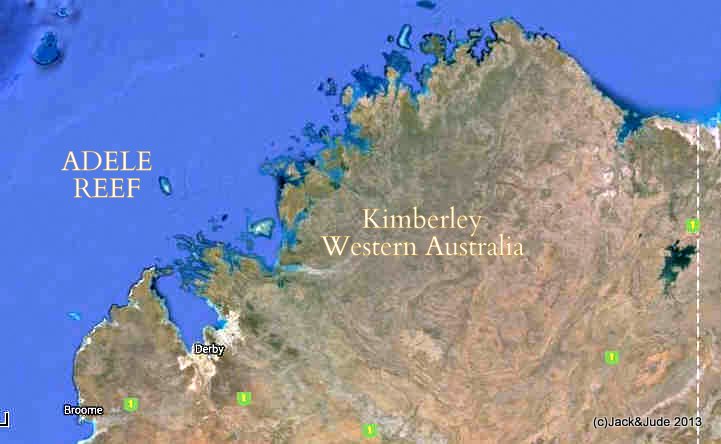 The Kimberley coast has so much to see and do, but it has it’s restrictions. The numerous crocodiles stop anyone except the brave and/or foolish from entering the water. And while the fishing can be good in some select locations, it can be quite ordinary in the turbid, fast flowing waters found around many of the anchorages.
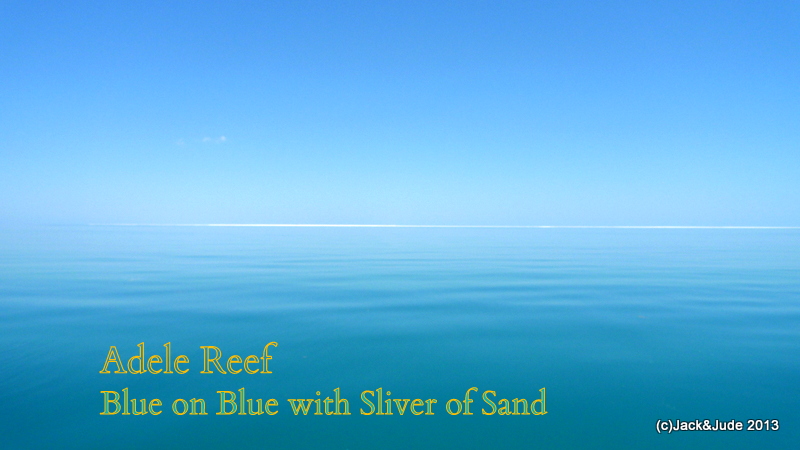
On our last journey through these waters we found a place that fills those gaps. Lying well offshore from King Sound, Adele Reef has no crocodiles. And while the water is not as clear as other mid-ocean coral reefs, it is clear enough to snorkel amongst a huge variety of marine life in the soft and hard corals. We saw numerous turtles, many just off our anchored vessel, and several huge rays. Plus, a mother whale and her calf kept us company for a few days. And of course because Adele Reef is the only land for many miles, the islets and lagoon are filled with seabirds.
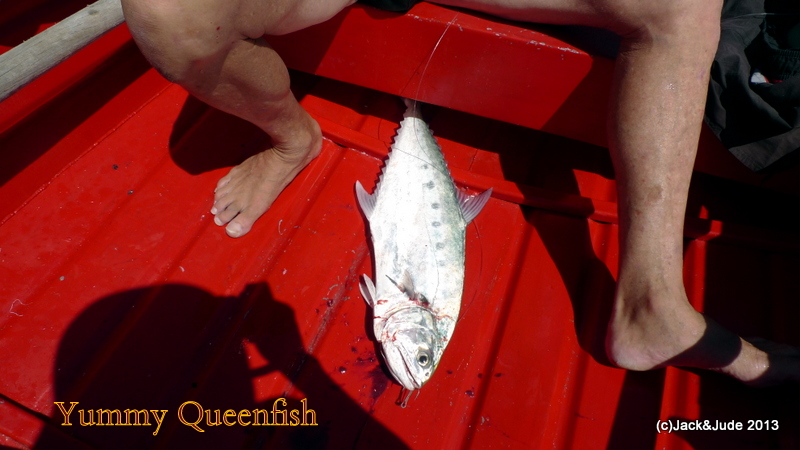
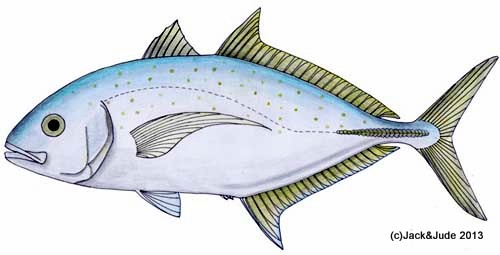 We never went without a feed of fish. The fishing was exciting and fast. Each time returning from our swim near the smaller islet, schooling Queen fish chased our outboard and struck our small lure within seconds of it going in. Closer to the sandy shore we lured in pan sized Turrum. Both specie in schools so large we dug out our GoPro to film them underwater.
 ENTRANCE
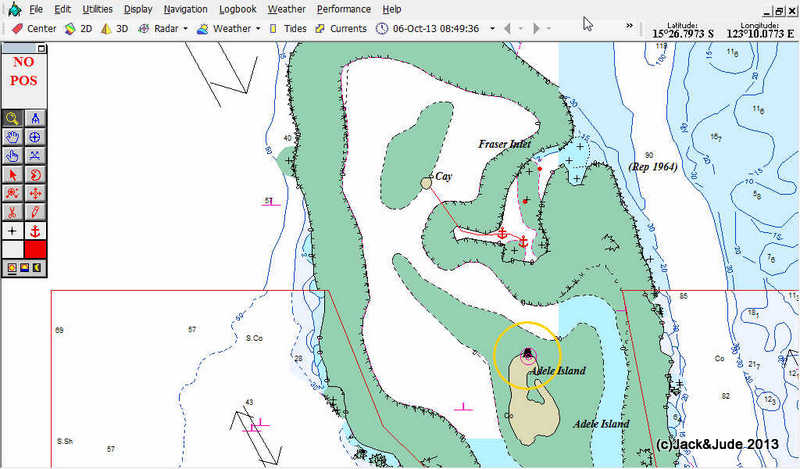
The pilot recommends entering at low water, which surprised us until we followed their advice. As Adele lies near King Sound, home of Australia’s largest tidal range, the reef covers over considerably and with the slight turbidity makes finding the reef edge a little hard at high tide. At low tide, the edge is often exposed, and Fraser Inlet, being quite deep, is easy to follow. There are two isolated dangers and low water makes them more visible in good light.
ANCHORAGE
Sand, sand and more sand. There is just miles of pure coral sand at Adele and the anchorage varies from 5 to 10 M over a large area. There is no protection from wind, but then there is little of that around Adele Reef. Any swell is blocked by the extensive coral flats, and we found perfect mill pond conditions for most of our week long stay in August.
GPS Waypoints:
Anchorage – 15° 28.679’S 123° 09.415’E
Safe water – Coral heads near to west
15° 27.446’S 123° 09.698’E
15° 28.002’S 123° 09.431’E
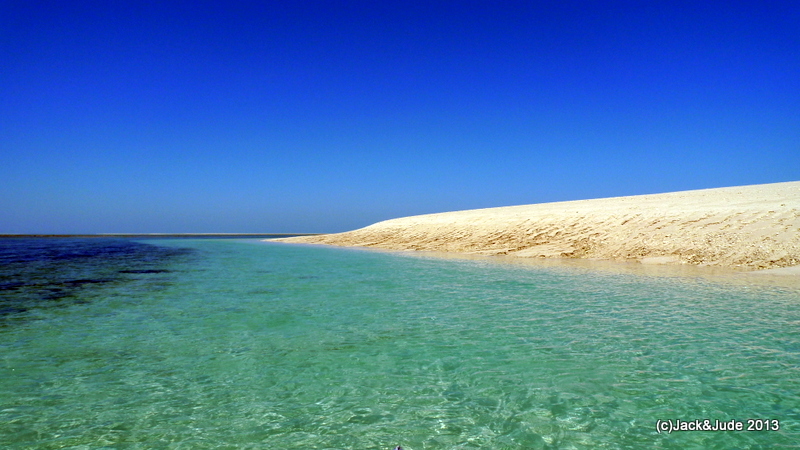
Steep sided channel with clean sandy bottom, best around low tide
some current otherwise
SWIMMING
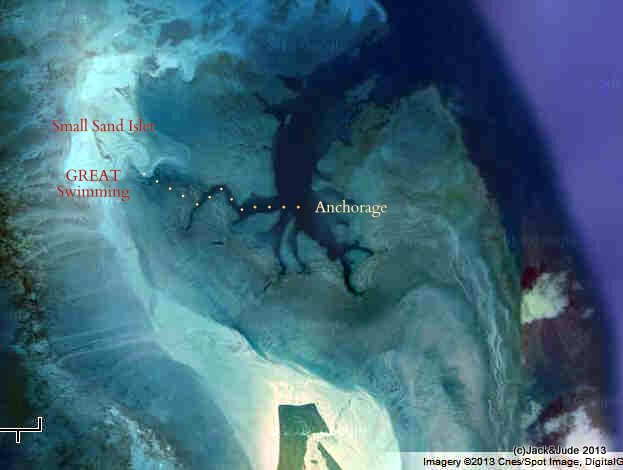
We choose Adele Reef so that Jude could exercise her recently broken leg while the sea supported her weight. But to our delight, what we found was a swimmer’s paradise. Following a torturous channel to the smaller sand cay revealed a deep water channel right up to the sand. Even at low water, we could literally run our dinghy right up onto the sand islet with the outboard still in waist deep water. Schools of fish swam past us on their way in and out of the captive lagoons. The other spin off with visiting at low water is the huge area of sand that’s exposed, perfect for a wander.
Update: 14 July 2025 – Crocs sighted in lagoon
On June 27, 2025, Silversea cruise ship passengers were stranded on Adele Reef when the extreme tides were misjudged. A passenger sent us pictures of two crocs sighted.
During our visit, we saw no signs of crocs on the sand island nor in the lagoon.
https://www.abc.net.au/news/2025-06-27/silversea-cruises-passengers-stranded-at-adele-island-off-wa/105468440


Adele Island Bird Colony
Adele Island is an important site for breeding seabirds with several listed species breeding of the Japan-Australia Migratory Birds Agreement (JAMBA), China-Australia Migratory Birds Agreement (CAMBA) and Republic of Korea Migratory Birds Agreement (ROKAMBA). And, with rookeries of Cormorants, Australian Pelicans, Lesser Frigate Birds (Fregata ariel), Brown Booby (Sula leucogaster), Red-footed Booby (Sula sula) and Masked Booby (Sula dactylatra). In global terms, birds breeding on the island include the Lesser Frigatebird with 2000-5700 breeding pairs, Brown Booby with 1500-8500 breeding pairs, Grey-tailed Tattler with up to 5500 individuals, and Red-necked Stint with up to 4100 individuals.
I was on the Silverseas expedition that got stranded in the Adele Island lagoon. The two and a half hour slog out through brittle dead coral towards a setting sun was made more anxiety-inducing by the two crocodiles we saw in the lagoon before we started heading back to the ship. I have pictures of both so, yes, there are crocodiles in the Adele Island lagoon.
Thank you Peter for your news and photos. With your permission, I will update my article with your photos and information.
I conducted graduate research on seabirds on Adele and assisted with a rodent eradication there during several expeditions in 2013/14, and there were at least three big resident crocodiles there then that we actively monitored for our own safety. This is not a safe swimming spot; sounds like you were just lucky! Tides here are not to be underestimated. It is also a protected area due to the nesting seabirds and landings ashore are not permitted for the general public.
Thanks for another great idea. We’re leaving in March next year. If you had one of your special favourite aboriginal gorgeous in the Kimberley in the coast what would it be? Regards John Ball Ashley you did correct me. I’m putting my phone number quite a few months ago.
You can’t beat the Berekley River for great anchroages and easy access to ancient art. https://youtu.be/l8lBZvzMvM4 wil give you a peek.